

Blog
Tennis Players and SoftWave Therapy: Recovery from Wrist, Elbow, Shoulder, and Knee Pain
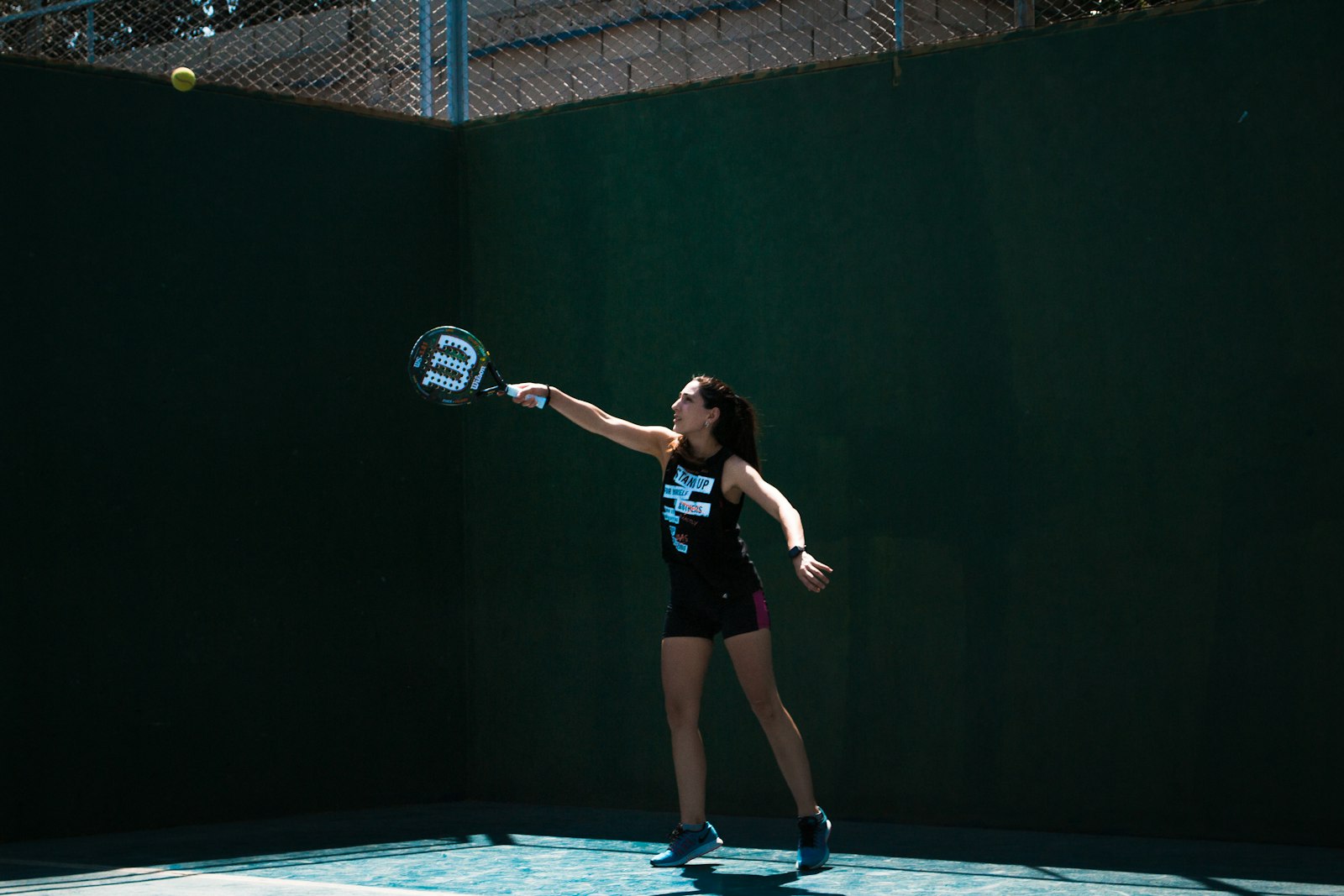
Faster Recovery from Wrist, Elbow, Shoulder, and Knee Pain for Charleston Tennis Players — Without Drugs, Injections, or Long Layoffs
Charleston is a tennis town. From the historic Charleston Open at Daniel Island to the dozens of competitive clubs, USTA leagues, junior development programs, and country club ladders, the sport has a deep year-round presence here — and a corresponding population of players whose bodies are absorbing the repeated load of high-volume tennis. Wrist, elbow, shoulder, knee, hip, and lower back issues quietly accumulate over months and years of play, until they finally stop being something a player can train through.
At Fix Your Pain Charleston, Dr. Jeremiah Jimerson is helping Charleston tennis players recover from chronic and acute injuries, return to confident play, and protect their longevity in the sport — without drugs, without surgery, and without spending half the season off the court. The key is SoftWave Tissue Regeneration Therapy.
Why Tennis Players See This Specific Pattern of Injuries
Tennis is a sport of extreme repetition layered onto explosive movement. The serve loads the shoulder, back, and core every single time. The forehand and backhand load the wrist, elbow, and rotator cuff thousands of times per match. Quick lateral changes of direction load the knees, ankles, hips, and Achilles tendons. Over time, the predictable injury picture includes:
- Tennis elbow (lateral epicondylitis) — the namesake injury, especially common in players using one-handed backhands and improper grip mechanics
- Golfer’s elbow (medial epicondylitis) — from forehand spin and serve mechanics
- Wrist tendinopathy — from heavy topspin and racket-head speed work
- Rotator cuff tendinopathy and tears — from repetitive serving and overhead work
- Shoulder impingement — from cumulative serve volume
- Patellar tendinopathy (jumper’s knee) — from explosive movement and quick stops
- Meniscal irritation and aggravated knee osteoarthritis — from pivots and lateral loading
- Hip flexor tightness and labral irritation — from quick stops and serve mechanics
- Low back pain — especially from serve mechanics and rotational load
- Achilles tendinopathy — from explosive push-offs and direction changes
The biological problem with every one of these injuries is the same: tendons, ligaments, and fibrocartilage have a notoriously limited blood supply. Without dramatic increases in circulation, those tissues simply cannot regenerate the way muscle can. Rest, ice, and anti-inflammatories don’t restore the underlying structure — they just temporarily quiet the symptoms. So players cycle through flare-ups, modify their game, and often retire injuries with permanent compromise rather than fully resolving them.
SoftWave Tissue Regeneration Therapy is built to solve that exact problem. Learn more about how SoftWave Tissue Regeneration Technology works.
How SoftWave Therapy Heals Tennis Injuries at the Cellular Level
SoftWave Tissue Regeneration Therapy uses patented electrohydraulic broad-focused supersonic acoustic waves to deliver targeted mechanical energy deep into injured tissue, activating biological repair processes that no other non-invasive technology can replicate.
For tennis players, SoftWave drives:
- Neoangiogenesis — new blood vessel formation through VEGF and eNOS release, dramatically increasing blood supply to chronically circulation-starved tendons, ligaments, and joint structures
- Dormant stem cell activation — awakening resident mesenchymal stem cells in and around the injured tissue for active regeneration
- Inflammation resolution — downregulating chronic inflammatory signaling and replacing it with productive healing activity
- Scar tissue and adhesion breakdown — freeing fibrotic restrictions in the forearm extensors, rotator cuff, hip flexors, and other heavily loaded structures
- Collagen fiber realignment — supporting proper alignment of new collagen in healing tendons, restoring tensile strength and reducing re-injury risk
- Nerve sensitization reduction — calming hyperexcitable peripheral nerves contributing to chronic elbow, wrist, shoulder, and knee pain
For a tennis player, the practical translation is that SoftWave often allows continued (modified) play during recovery, accelerates how quickly the underlying tissue rebuilds, and dramatically reduces the chance the injury comes right back the moment match volume returns to normal.
Ready to play without nursing the same injury for years? Schedule your SoftWave evaluation.
SoftWave + ART + Chiropractic: The Complete Tennis Recovery Protocol
Tennis injuries are rarely about a single tissue in isolation. The elbow flares because the wrist mechanics shifted. The shoulder hurts because the thoracic spine lost rotation. The knee aches because the hip is restricted. To truly resolve tennis-related pain, you have to address the entire chain.
Dr. Jimerson combines SoftWave with Active Release Techniques (ART) and chiropractic care for serious tennis players:
- SoftWave regenerates damaged tissue, restores blood supply, and resolves chronic inflammation
- ART identifies and releases the muscular adhesions, trigger points, and compensatory restrictions in the forearm, shoulder, hip, and lower extremities
- Chiropractic adjustments restore proper spinal, pelvic, and joint motion essential for biomechanically clean serves, ground strokes, and movement
The combination shortens recovery, reduces re-injury, and often produces measurable improvements in serve speed, racket-head speed, and overall movement quality.
Read more about combining SoftWave and ART for elbow recovery.
The Charleston Tennis Players We Treat Most Often
Dr. Jimerson works with tennis players across the spectrum:
- Competitive USTA league players — whose match volume and intensity produce predictable overuse injuries
- Tournament players and junior development athletes — whose growing bodies are also handling significant training load
- Country club ladder regulars — consistent year-round play and predictable cumulative wear
- Coaches and teaching pros — whose teaching volume and ball-feeding loads add up faster than recreational players realize
- Masters and senior tennis players — whose tissues need more recovery support than they used to
- Players coming back from injury — especially elbow, shoulder, and knee issues that have lingered through multiple seasons
- Hybrid players — tennis + pickleball, tennis + paddle, tennis + fitness training, where overlapping load patterns multiply risk
If chronic elbow, wrist, shoulder, or knee pain is shortening your matches or making you dread your next session — you’re an excellent candidate for SoftWave. Call 843.873.6004 or book your evaluation online today.
SoftWave vs. Cortisone, Braces, and Surgery for Tennis Injuries
The standard medical response to chronic tennis injuries usually escalates: rest, anti-inflammatories, braces and supports, physical therapy, cortisone injections, and eventually surgical consultation if pain persists. The problem with that pathway is that almost none of it actively rebuilds damaged tissue. Rest is passive. Anti-inflammatories suppress symptoms. Cortisone temporarily reduces inflammation but has been shown to weaken tendon tissue over repeated injection cycles. Surgery, when indicated, comes with long rehab timelines that often keep players out for months.
SoftWave is fundamentally different. Rather than masking symptoms or modifying anatomy, it stimulates the body’s own regenerative biology to repair the damaged structures. There’s no needle, no incision, and no cumulative tissue damage from repeated treatment.
Learn why more Charleston athletes are choosing SoftWave over cortisone.
What Tennis Players Experience During and After SoftWave Treatment
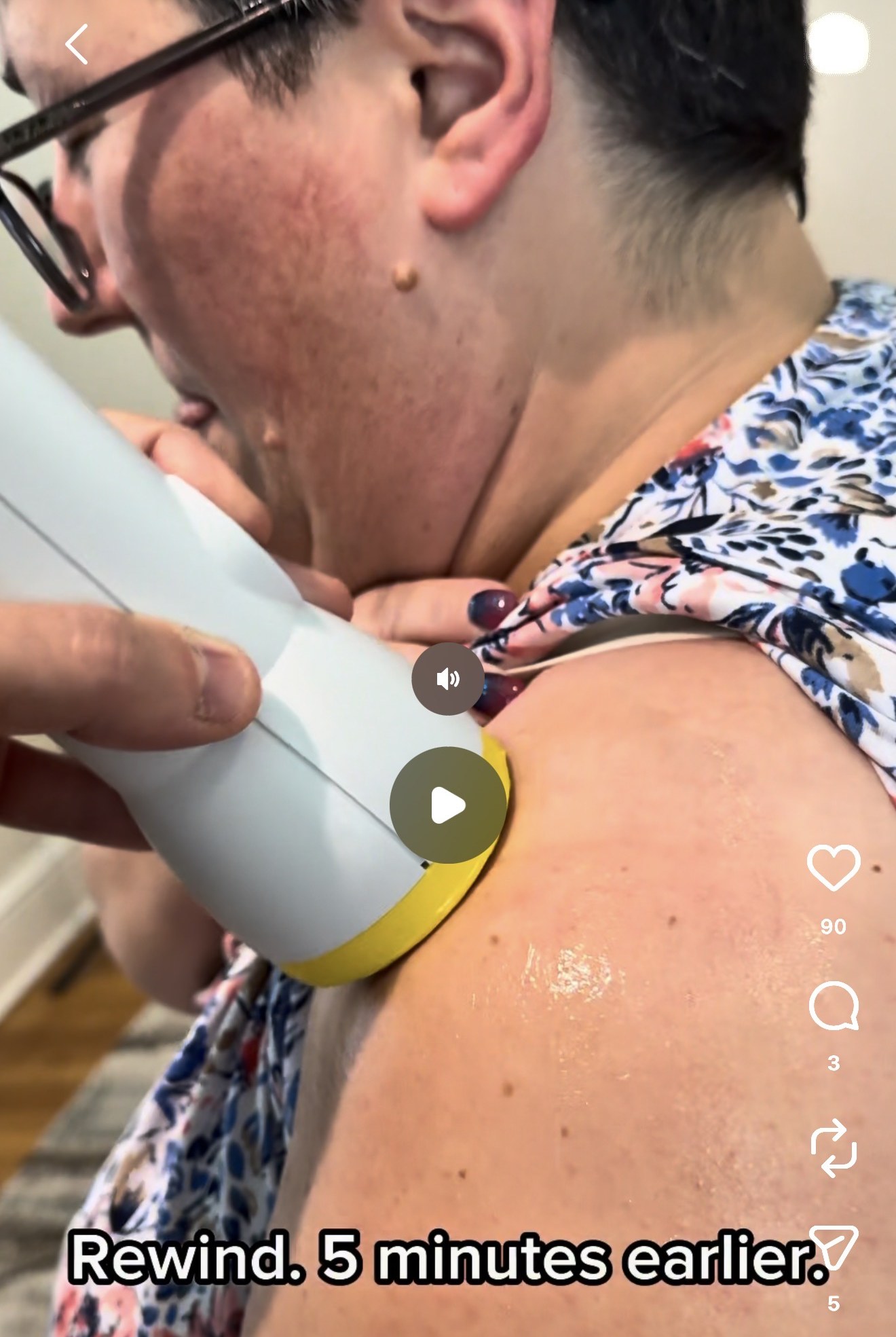
Each SoftWave session takes approximately 15 minutes. The applicator is placed directly over the affected area — elbow, wrist, shoulder, knee, hip, wherever the issue is — and delivers comfortable broad-focused acoustic waves into the tissue. No anesthesia, no needles, no downtime. Most players describe the sensation as a pulsing or tapping pressure that often produces immediate change in tissue tone.
Some mild post-session soreness for up to 24 hours is normal. After that, the pattern is progressive: less pain on serves and ground strokes, easier match recovery, and the confidence to load the affected area without flinching.
Most tennis players report meaningful change within the first two to four sessions of a standard treatment series.
Stop Bracing It. Start Healing It.
If you’ve been playing through chronic elbow, wrist, shoulder, or knee pain — bracing it, taping it, taking anti-inflammatories before matches, modifying your strokes — know that there is a powerful, evidence-supported alternative right here in Charleston. At Fix Your Pain Charleston, Dr. Jeremiah Jimerson is helping tennis players heal completely, not just survive another season.
Your elbows, shoulders, wrists, and knees deserve more than a patch. They deserve real regeneration — and with SoftWave Tissue Regeneration Therapy, that is exactly what’s possible.
Don’t let a chronic injury define your tennis. Schedule your SoftWave evaluation at Fix Your Pain Charleston today — and find out what it feels like to heal the right way.
Fix Your Pain Charleston
Dr. Jeremiah Jimerson, DC, ART
761 Saint Andrews Blvd, Charleston, SC 29407 // 843.873.6004
‹ Back



 761 St Andrews Blvd