

Blog
Diabetic Neuropathy and SoftWave Therapy: A Hope-Filled Option for Charleston Patients
A Hope-Filled, Drug-Free Option for Charleston Patients Living With Diabetic Peripheral Neuropathy Pain, Numbness, and Burning
If you or someone you love is living with diabetic peripheral neuropathy, you already know how relentless it can be. The burning. The pins and needles. The numb feet that suddenly stab with sharp pain at night. The progressive loss of sensation that makes balance precarious and increases the risk of unnoticed foot injuries. And the long list of medications — gabapentin, pregabalin, duloxetine, amitriptyline — that may dull symptoms but come with side effects of their own and don’t reverse the underlying nerve damage. For many patients, conventional medicine offers symptom management and the quiet implication that things will simply get worse over time.
At Fix Your Pain Charleston, Dr. Jeremiah Jimerson is offering Charleston diabetic neuropathy patients something different: a regenerative therapy that targets the underlying biology of nerve injury rather than just masking its symptoms. The key is SoftWave Tissue Regeneration Therapy, and combined with comprehensive metabolic, chiropractic, and lifestyle support, it is changing the way patients with diabetic peripheral neuropathy think about their futures.
What Diabetic Peripheral Neuropathy Actually Is
Diabetic peripheral neuropathy is nerve damage caused by chronically elevated blood sugar — and the cellular and vascular cascade that comes with it. Over time, high glucose levels damage the small blood vessels that supply the peripheral nerves, particularly in the feet and lower legs. Starved of adequate blood flow, the nerves themselves break down, producing the constellation of symptoms patients know all too well:
- Burning pain — especially at night, often described as feet on fire
- Numbness — progressive loss of sensation in the feet, sometimes extending up the legs
- Tingling and pins-and-needles sensations
- Sharp, stabbing, or electric-shock pains — often unpredictable and severe
- Loss of balance and increased fall risk — from impaired proprioception
- Hypersensitivity — even light touch like a bed sheet can be painful
- Muscle weakness and atrophy — in advanced cases
- Foot ulcers and slow-healing wounds — due to combined nerve and vascular damage
The standard medical approach focuses on glucose control and symptom-targeting medications. Both are important. But they don’t do anything to restore the vascular supply to the affected nerves or to support the regenerative biology that the body is otherwise capable of. That gap is exactly where SoftWave Therapy fits in.
Learn more about how SoftWave Tissue Regeneration Technology works.
How SoftWave Therapy Addresses Diabetic Neuropathy at the Cellular Level
SoftWave Tissue Regeneration Therapy uses patented electrohydraulic broad-focused supersonic acoustic waves to deliver targeted mechanical energy deep into affected tissue. For diabetic peripheral neuropathy, the biological response addresses several of the most important contributors to nerve dysfunction:
- Neoangiogenesis — SoftWave is uniquely well-documented for stimulating the formation of new blood vessels through VEGF and eNOS release. For diabetic neuropathy — which is fundamentally a small-vessel disease — this is potentially transformative. Restored blood supply means restored oxygen and nutrient delivery to chronically starved nerves
- Dormant stem cell activation — resident mesenchymal stem cells are mobilized in and around treated tissue, contributing to regenerative biological activity
- Inflammation resolution — chronic inflammatory signaling, which contributes to ongoing nerve damage, is downregulated and replaced with healing-oriented activity
- Nerve sensitization reduction — SoftWave calms hyperexcitable peripheral nerves, reducing the intensity of burning and stabbing pain even before full structural recovery
- Tissue regeneration around the nerves — healthier surrounding tissue supports healthier nerve function
SoftWave doesn’t replace good diabetes management, appropriate medical care, or healthy lifestyle changes. It complements them by adding an active regenerative input that conventional care simply doesn’t provide.
SoftWave + Chiropractic + Comprehensive Care for Diabetic Neuropathy
Diabetic peripheral neuropathy responds best when it’s addressed comprehensively. Dr. Jimerson combines SoftWave Therapy with chiropractic care and broader lifestyle and metabolic guidance to support the most complete recovery picture possible:
- SoftWave directly supports vascular and nerve recovery at the cellular level
- Chiropractic adjustments support proper spinal and pelvic mechanics, which influence the entire peripheral nervous system and circulation to the lower extremities
- Lifestyle and metabolic guidance — supporting glucose stability, anti-inflammatory nutrition, movement, and weight management — addresses the underlying disease process
This integrated approach is why so many diabetic neuropathy patients report changes they hadn’t experienced in years of medication-only management.
Read more about SoftWave Therapy for peripheral neuropathy.
Who Benefits Most From SoftWave Therapy for Diabetic Neuropathy
Dr. Jimerson works with diabetic neuropathy patients across the spectrum of severity:
- Early-stage patients — with mild tingling, occasional burning, or early loss of sensation, where active intervention can have the most impact
- Moderate-stage patients — with chronic symptoms, regular nighttime pain, and progressive sensation loss
- Patients on multiple medications — who want options beyond stacking more prescriptions
- Patients with poor medication tolerance — for whom gabapentin, pregabalin, or duloxetine have produced side effects
- Patients with concurrent vascular disease — for whom restored circulation has implications well beyond neuropathy alone
- Patients at risk for foot ulcers or with healing wounds — where improved tissue blood supply is particularly important
- Patients with type 2 diabetes pursuing comprehensive lifestyle change
- Patients with type 1 diabetes and long-standing neuropathy
If diabetic neuropathy has narrowed your life — limiting your walking, your sleep, your independence — you’re an excellent candidate to explore what SoftWave can do. Call 843.873.6004 or book your evaluation online today.
SoftWave vs. Medications and Standard Neuropathy Care
The standard medical treatment for diabetic peripheral neuropathy is symptom-targeting medication — gabapentin, pregabalin, duloxetine, tricyclic antidepressants, and various topical agents. These medications can blunt symptoms for many patients. They don’t restore nerve function, don’t improve circulation, and don’t change the underlying disease process. Many of them also come with significant side effects: drowsiness, cognitive fog, weight gain, dependency, and others.
SoftWave Therapy is fundamentally different. Rather than dulling the symptoms produced by damaged nerves, it stimulates the body’s own regenerative biology — particularly the angiogenic response that addresses the vascular root cause. It has no medication interactions, no side effects, and no cumulative risk.
For many patients, SoftWave is best used as a complement to good medical management — not a replacement — offering an active regenerative pathway that conventional care simply doesn’t provide.
What Patients Experience During and After SoftWave Treatment for Diabetic Neuropathy
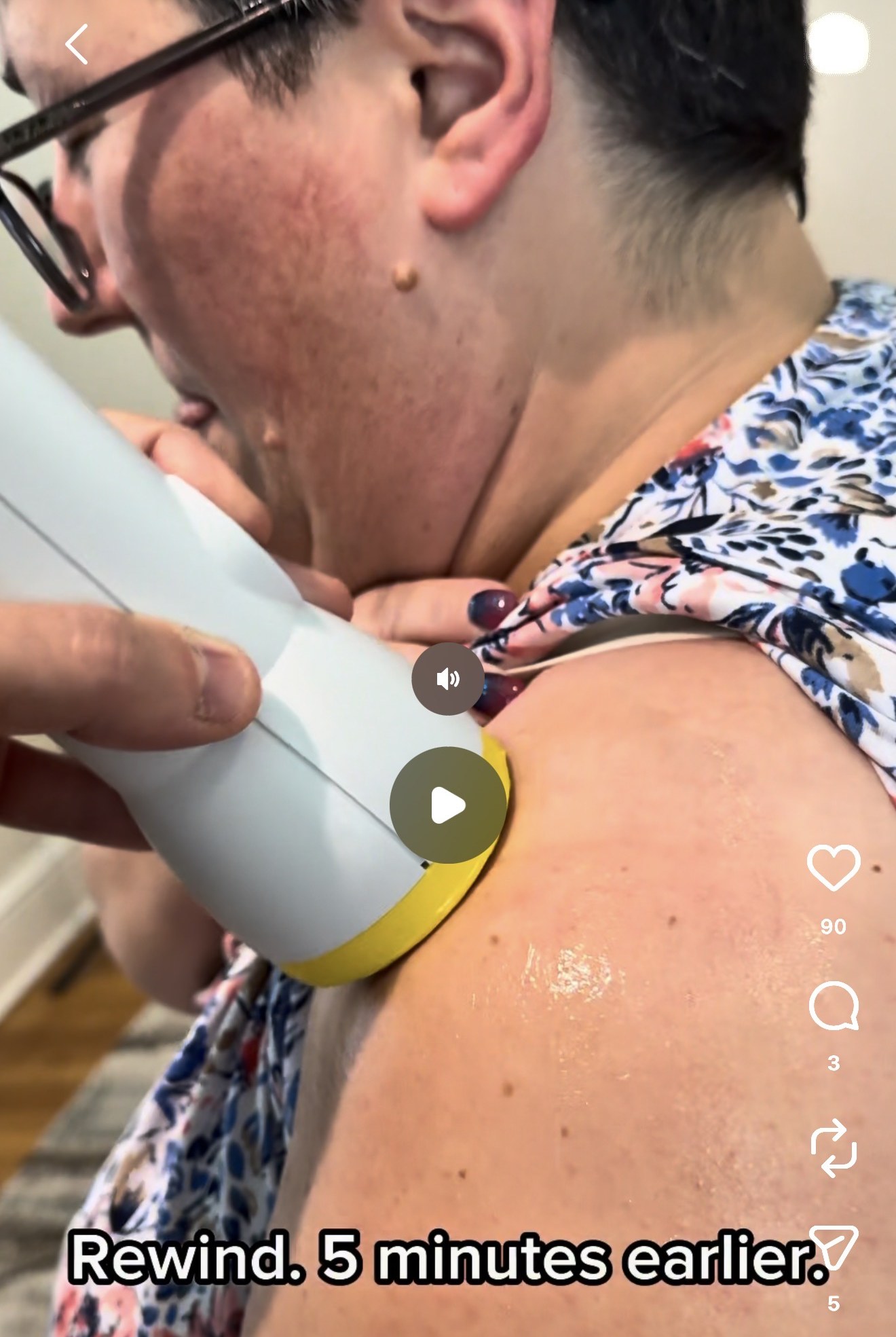
Each SoftWave session takes approximately 15 minutes. The applicator is moved across the affected area — usually the feet, ankles, and lower legs — delivering comfortable broad-focused acoustic waves into the tissue. There’s no anesthesia, no needles, and no downtime. Most patients describe the sensation as a pulsing or tapping pressure that’s easily tolerated.
Some patients notice mild changes in sensation in the hours following a session — a sign that the biological response has been activated. Across a treatment series, patients commonly report reductions in burning pain, decreased nighttime symptoms, improvements in sensation, and better daily function.
Most patients begin reporting meaningful changes within the first several sessions of a structured treatment series. Diabetic neuropathy is a long-running condition, and recovery is typically progressive rather than sudden.
Stop Just Managing It. Start Actively Healing.
If you’ve been told that diabetic peripheral neuropathy is something to simply manage — that medications are your only option, that this is just how things are going to be — know that there is a powerful, evidence-supported regenerative therapy available right here in Charleston. At Fix Your Pain Charleston, Dr. Jeremiah Jimerson is helping diabetic neuropathy patients pursue active recovery, not just symptom control.
Your nerves, your circulation, and your future deserve more than another prescription. They deserve real, regenerative support — and with SoftWave Tissue Regeneration Therapy, that is exactly what’s possible.
Don’t let diabetic neuropathy keep narrowing your life. Schedule your SoftWave evaluation at Fix Your Pain Charleston today — and find out what it feels like to heal the right way.
Fix Your Pain Charleston
Dr. Jeremiah Jimerson, DC, ART
761 Saint Andrews Blvd, Charleston, SC 29407 // 843.873.6004
‹ Back




 761 St Andrews Blvd