

Blog
Quadriceps and Hamstring Strains: How SoftWave Therapy Speeds Recovery for Charleston Athletes
How SoftWave Therapy Speeds Recovery for Charleston Athletes With Quadriceps and Hamstring Strains — Without Drugs or Long Layoffs
If you’ve ever felt the sudden grab in the back of your thigh sprinting for a ball, the pop in the front of your quad on an explosive cut, or the dull ache that settles in after a hard speed workout, you already know how disruptive a quadriceps or hamstring strain can be. These injuries are notoriously slow to fully heal, prone to recurrence, and often produce months of recurring tightness, weakness, and reinjury even after the initial pain subsides. They’re one of the most common reasons athletes lose training time at every level — and they’re also one of the injuries that responds especially well to active regenerative therapy.
At Fix Your Pain Charleston, Dr. Jeremiah Jimerson is helping Charleston athletes recover from quadriceps and hamstring strains faster, heal the underlying tissue more completely, and address the biomechanical factors that make these injuries so recurrence-prone — without drugs, without injections, and without sitting out half the season. The key is SoftWave Tissue Regeneration Therapy.
Schedule your strain recovery evaluation today and find out if SoftWave is the missing piece.
Why Quad and Hamstring Strains Are So Often Misunderstood
A muscle strain is a tear — partial or complete — of muscle fibers, the connective tissue around them, or the musculotendinous junction. Strains are graded from I (mild) to III (complete rupture), and the most common locations in athletes include:
- Hamstring strains — usually at the proximal musculotendinous junction near the sit bone, in the muscle belly of biceps femoris, or at the distal insertion behind the knee
- Quadriceps strains — usually in rectus femoris (the most common quad strain), vastus medialis, or distal at the patellar tendon
- Adductor (groin) strains — closely related, often co-occurring
- Calf strains — usually medial gastrocnemius (“tennis leg”)
Why are these injuries so recurrence-prone? Three reasons. First, scar tissue that forms during natural healing is biomechanically inferior to the original muscle — less elastic, less strong, and more prone to re-tearing. Second, the surrounding tissue often develops compensatory adhesions and trigger points that perpetuate poor movement patterns. And third, the original biomechanical or alignment issues that loaded the muscle abnormally are almost never addressed during standard recovery. Athletes return to play and reinjure the same muscle — sometimes the same exact spot — weeks or months later.
SoftWave Tissue Regeneration Therapy is built to address all three of those problems. Learn more about how SoftWave Tissue Regeneration Technology works.
How SoftWave Therapy Heals Muscle Strains at the Cellular Level
SoftWave Tissue Regeneration Therapy uses patented electrohydraulic broad-focused supersonic acoustic waves to deliver targeted mechanical energy deep into injured tissue. For quadriceps and hamstring strains, SoftWave drives:
- Neoangiogenesis — new blood vessel formation through VEGF and eNOS release, dramatically increasing blood supply to the strained muscle, the musculotendinous junction, and surrounding connective tissue
- Dormant stem cell activation — awakening resident mesenchymal stem cells for active muscle and connective tissue regeneration
- Improved scar tissue quality — supporting more organized collagen alignment during healing, producing tissue that more closely resembles original muscle architecture rather than dense, restrictive scar
- Inflammation resolution — downregulating chronic inflammatory signaling and replacing it with productive healing activity
- Scar tissue and adhesion breakdown — in chronic or recurrent strains, breaking down fibrotic restrictions that limit muscle excursion and predispose to re-injury
- Nerve sensitization reduction — calming hyperexcitable peripheral nerves that contribute to chronic tightness and protective guarding
For an athlete, the practical translation is that SoftWave accelerates recovery from acute strains, dramatically improves outcomes for chronic and recurrent strains, and reduces the high re-injury rate that plagues these injuries when only conventional care is used.
Ready to heal the strain instead of nursing it for months? Schedule your SoftWave evaluation.
SoftWave + ART + Chiropractic: The Complete Strain Recovery Protocol
Quadriceps and hamstring strains are biomechanical injuries as much as they are tissue injuries. Pelvic position, lumbar mechanics, hip mobility, and lower extremity alignment all influence how these muscles are loaded during sprinting, cutting, and explosive movement. Without addressing the biomechanics, the same strain pattern returns.
Dr. Jimerson combines SoftWave with Active Release Techniques (ART) and chiropractic care to address the full picture:
- SoftWave regenerates damaged muscle and connective tissue, restores blood supply, and resolves chronic inflammation
- ART identifies and releases the muscular adhesions, trigger points, and compensatory restrictions in the hip, glutes, and surrounding chain that contribute to abnormal loading
- Chiropractic adjustments restore proper pelvic, lumbar, and lower extremity motion essential for healthy explosive movement
The combination shortens recovery, dramatically reduces re-injury, and often unlocks performance improvements athletes hadn’t realized they had been losing to chronic restriction.
Read more about combining SoftWave and ART for soft tissue recovery.
The Charleston Athletes We Treat Most Often for Quad and Hamstring Strains
Dr. Jimerson works with strain-injury athletes across the sports spectrum:
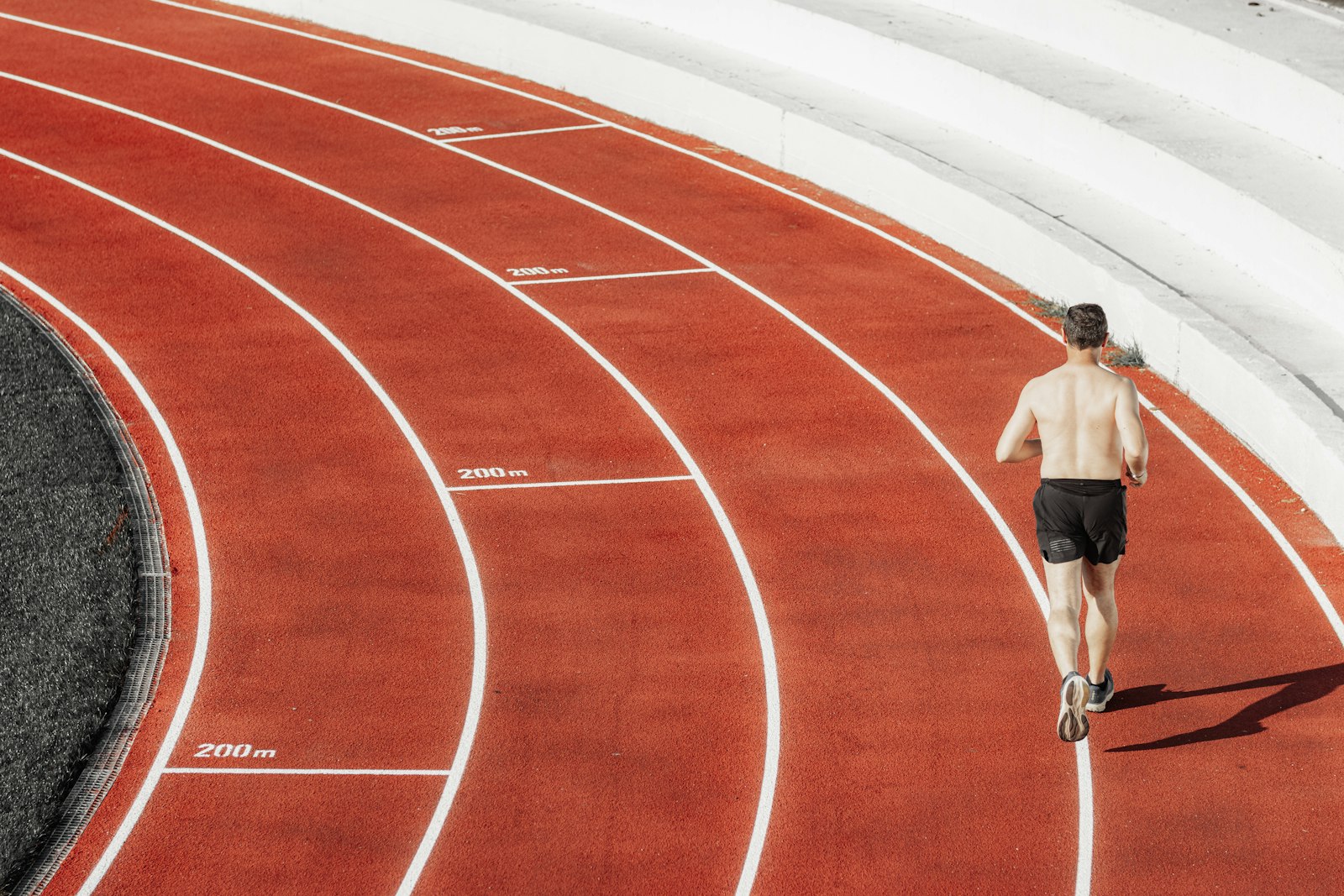
- Sprinters and track athletes — the classic hamstring strain population
- Soccer, lacrosse, and field hockey players — high-volume sprint and cut sports
- Football players — explosive movement and contact contributions
- Baseball and softball players — sprint volume and explosive baserunning
- Tennis and pickleball players — lateral cuts and explosive direction changes
- Triathletes and distance runners — recurrent low-grade hamstring tendinopathy at the sit bone is especially common
- Masters athletes — whose strains tend to recur more easily and heal more slowly
- CrossFit and HIIT athletes — high-rep explosive work with cumulative load
Whatever your sport, if a quad or hamstring strain has been recurring — or just refuses to fully resolve — you’re an excellent candidate for SoftWave. Call 843.873.6004 or book your evaluation online today.
SoftWave vs. Rest, RICE, and Injections for Muscle Strains
The standard pathway for an acute muscle strain is rest, ice, compression, elevation, anti-inflammatories, and a graded return to activity. For chronic or recurrent strains, treatment often escalates to physical therapy and, in some cases, cortisone or PRP injections. Most of these options offer some symptom benefit but don’t actively rebuild high-quality tissue. Cortisone in particular has been shown to weaken tendon tissue over time, increasing re-injury risk.
SoftWave is fundamentally different. Rather than suppressing symptoms or removing tissue, it stimulates the body’s own regenerative biology to repair and remodel the affected muscle and connective tissue. The result is faster healing in the acute phase, better-quality tissue across the recovery window, and significantly reduced recurrence risk.
Learn more about how SoftWave accelerates injury recovery.
What Athletes Experience During and After SoftWave Treatment for Strains
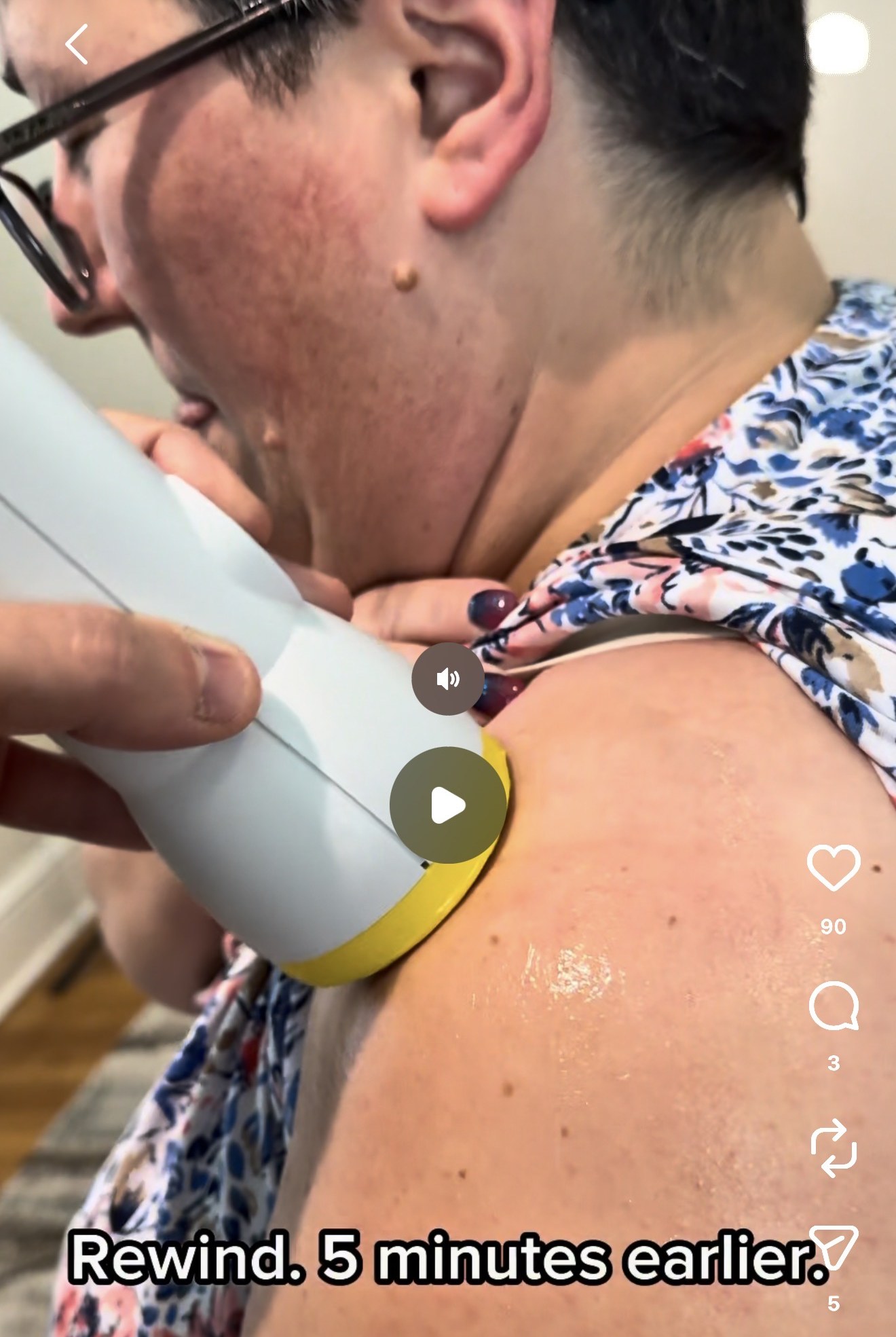
Each SoftWave session takes approximately 15 minutes. The applicator is placed over the strained muscle, the musculotendinous junction, and surrounding tissue, delivering comfortable acoustic waves into the area. No anesthesia, no needles, no downtime. Most patients describe a pulsing or tapping pressure.
Some mild post-session soreness in the treated area for up to 24 hours is normal. After that, the pattern is progressive: less pain with active stretching, better tolerance to graded load, and faster return to confident explosive movement.
Most strain patients report meaningful change within the first two to four sessions of a structured treatment series.
Stop Reinjuring. Start Healing.
If you’ve been managing the same quad or hamstring strain for months — reinjuring it every time you ramp training back up, taping it before games, modifying your sprint volume — know that there is a powerful, evidence-supported alternative right here in Charleston. At Fix Your Pain Charleston, Dr. Jeremiah Jimerson is helping athletes heal completely — not just patch and pray.
Your quads and hamstrings deserve more than scar tissue. They deserve real regeneration — and with SoftWave Tissue Regeneration Therapy, that is exactly what’s possible.
Don’t let a recurring strain steal your season. Schedule your SoftWave evaluation at Fix Your Pain Charleston today — and find out what it feels like to heal the right way.
Fix Your Pain Charleston
Dr. Jeremiah Jimerson, DC, ART
761 Saint Andrews Blvd, Charleston, SC 29407 // 843.873.6004
‹ Back


 761 St Andrews Blvd