

Blog
Cyclists and SoftWave Therapy: How Charleston Riders Are Beating Knee, Hip, and Back Pain
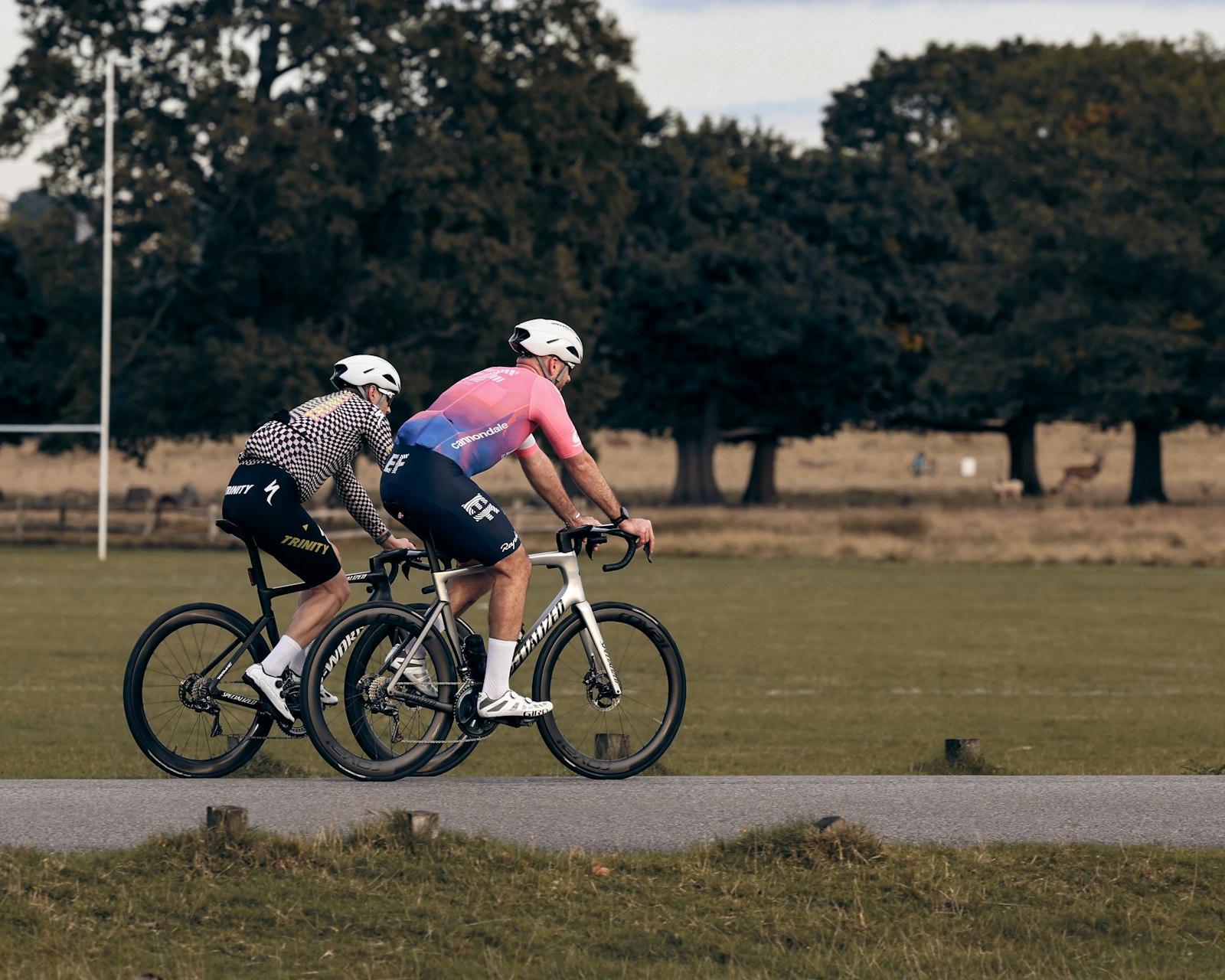
How Charleston Riders Are Beating Knee, Hip, Low Back, and Neck Pain Without Drugs, Injections, or Time Off the Bike
Cycling in the Lowcountry is hard to beat. The flat terrain, the dedicated bike infrastructure, the long stretches of road from Sullivan’s Island to Folly to the West Ashley greenway, the gravel routes through the Francis Marion — Charleston cyclists log serious miles every year. But miles on the bike also mean repetitive load on the same joints, the same connective tissues, and the same spinal segments — ride after ride, week after week. Over time, that load shows up as pain.
At Fix Your Pain Charleston, Dr. Jeremiah Jimerson is helping cyclists across the Lowcountry recover from chronic overuse injuries, ride pain-free, and add power and durability to their training — without drugs, without surgery, and without sitting out half the season. The key is SoftWave Tissue Regeneration Therapy, and it’s rapidly becoming an essential recovery tool for Charleston cyclists.
Why Cycling Injuries Are So Persistent and So Hard to Fully Heal
Cycling is a beautifully low-impact sport in one sense — there’s no pounding through the joints the way running does. But it’s also a sport of extreme repetition. Every pedal stroke is the same motion. Every hour in the saddle is the same posture. Every mile is the same load on the same connective tissue. Over weeks, months, and years, that repetition produces a predictable family of injuries:
- Anterior knee pain (patellofemoral pain syndrome) — from cleat position, saddle height, and quad-dominant pedaling
- IT band syndrome — lateral knee pain from tightness and friction along the iliotibial band
- Patellar tendinopathy — jumper’s knee adapted to the cyclist
- Hip flexor tightness, tendinitis, and impingement — from the repetitive hip flexion of pedaling
- Low back pain — lumbar paraspinal overload from sustained forward flexion in the saddle
- Sacroiliac (SI) joint dysfunction — from rotational forces and asymmetrical pedaling mechanics
- Cervical and upper back pain — from sustained head-up posture on the drops or aero bars
- Hand and wrist nerve compression — handlebar palsy and ulnar/median nerve irritation
- Achilles tendinopathy — especially in cyclists who run as well or push heavy gearing
The hard biological truth underneath these injuries is that tendons, ligaments, fibrocartilage, and intervertebral discs have a notoriously poor blood supply. Rest doesn’t deliver oxygen and nutrients to those tissues — only blood flow does. Without dramatically increased circulation, these injuries linger for months or years and keep returning every time training volume increases.
SoftWave Tissue Regeneration Therapy is built to solve exactly that problem. Learn more about how SoftWave Tissue Regeneration Technology works.
How SoftWave Therapy Heals Cycling Injuries at the Cellular Level
SoftWave Tissue Regeneration Therapy uses patented electrohydraulic broad-focused supersonic acoustic waves to deliver targeted mechanical energy deep into injured tissue — triggering biological repair processes that no other non-invasive technology can replicate.
For cyclists, SoftWave drives:
- Neoangiogenesis — new blood vessel formation through VEGF and eNOS release, dramatically increasing blood supply to tendons, ligaments, and joint structures that are chronically circulation-starved
- Dormant stem cell activation — awakening resident mesenchymal stem cells for active tissue regeneration and collagen remodeling
- Inflammation resolution — downregulating chronic inflammatory signaling and replacing it with productive, healing-oriented biological activity
- Scar tissue and adhesion breakdown — breaking down fibrous restrictions in the IT band, hip flexors, and other heavily loaded structures
- Collagen fiber realignment — supporting proper alignment of new collagen in healing tendons, restoring tensile strength and reducing re-injury risk
- Nerve sensitization reduction — calming hyperexcitable peripheral nerves contributing to handlebar palsy, sciatic irritation, and chronic low back pain
For a cyclist, the practical translation is simple: SoftWave doesn’t force you off the bike. It heals you faster than rest alone could, often allowing you to maintain a modified training schedule while the underlying tissue regenerates.
Ready to ride pain-free again? Schedule your SoftWave evaluation at Fix Your Pain Charleston.
SoftWave + ART + Chiropractic: The Complete Cyclist Recovery Protocol
Cycling injuries are rarely just about one tissue in one spot. The IT band tightens because the hip mechanics shifted. The knee flares because the foot rolled in. The low back hurts because the SI joint is moving asymmetrically. To truly resolve cycling pain, you have to address the entire chain.
That’s why Dr. Jimerson combines SoftWave Therapy with Active Release Techniques (ART) and chiropractic care for serious cyclists:
- SoftWave regenerates the damaged tissue, restores blood supply, and resolves chronic inflammation
- ART identifies and releases muscular adhesions, trigger points, and compensatory restrictions in the hips, glutes, quads, hamstrings, and IT band
- Chiropractic adjustments restore proper pelvic, sacroiliac, and spinal alignment, eliminating the mechanical drivers of overuse injury
The combination shortens recovery, reduces re-injury, and often unlocks performance improvements cyclists didn’t realize were available to them.
Read more about combining SoftWave and ART for soft tissue recovery.
The Charleston Cyclists We Treat Most Often
Dr. Jimerson works with cyclists across the spectrum:
- Road cyclists logging long weekend rides — the classic IT band and knee pain pattern
- Triathletes — whose multi-sport load multiplies the overuse risk
- Gravel and adventure riders — vibration, variable terrain, and long saddle hours
- Mountain bikers — impact, technical riding, and crash recovery
- Indoor cycling and Peloton enthusiasts — high cadence, high frequency, and often poor fit
- Commuting cyclists — daily mileage on imperfect equipment
- Masters racers — competitive athletes whose recovery needs more support than their twenties demanded
- New cyclists ramping up volume — whose body is suddenly being asked to do something it’s never done before
Whatever discipline and whatever volume, if knee, hip, back, or neck pain is shortening your rides or threatening your season — you’re a strong candidate for SoftWave. Call 843.873.6004 or book your evaluation online today.
SoftWave vs. Rest, Injections, and Surgery for Cycling Injuries
The standard answer to a chronic cycling injury is some combination of rest, anti-inflammatories, physical therapy, and — if pain persists — a steroid injection or surgical consult. The problem with this approach is that none of it actively regenerates tissue. Rest is passive waiting. Anti-inflammatories suppress symptoms. Cortisone, while temporarily quieting inflammation, has been shown to weaken tendon tissue over time. And surgery, for most cycling overuse injuries, is a dramatic step that doesn’t address why the injury developed in the first place.
SoftWave Therapy is fundamentally different. Rather than suppressing the inflammatory response, it resolves the tissue damage driving it. Cyclists who choose SoftWave aren’t buying temporary relief — they’re investing in actual regeneration of the structures causing their pain. And there’s no cumulative risk to repeated treatment.
Learn why more Charleston athletes are choosing SoftWave over cortisone injections.
What Cyclists Experience During and After SoftWave Treatment
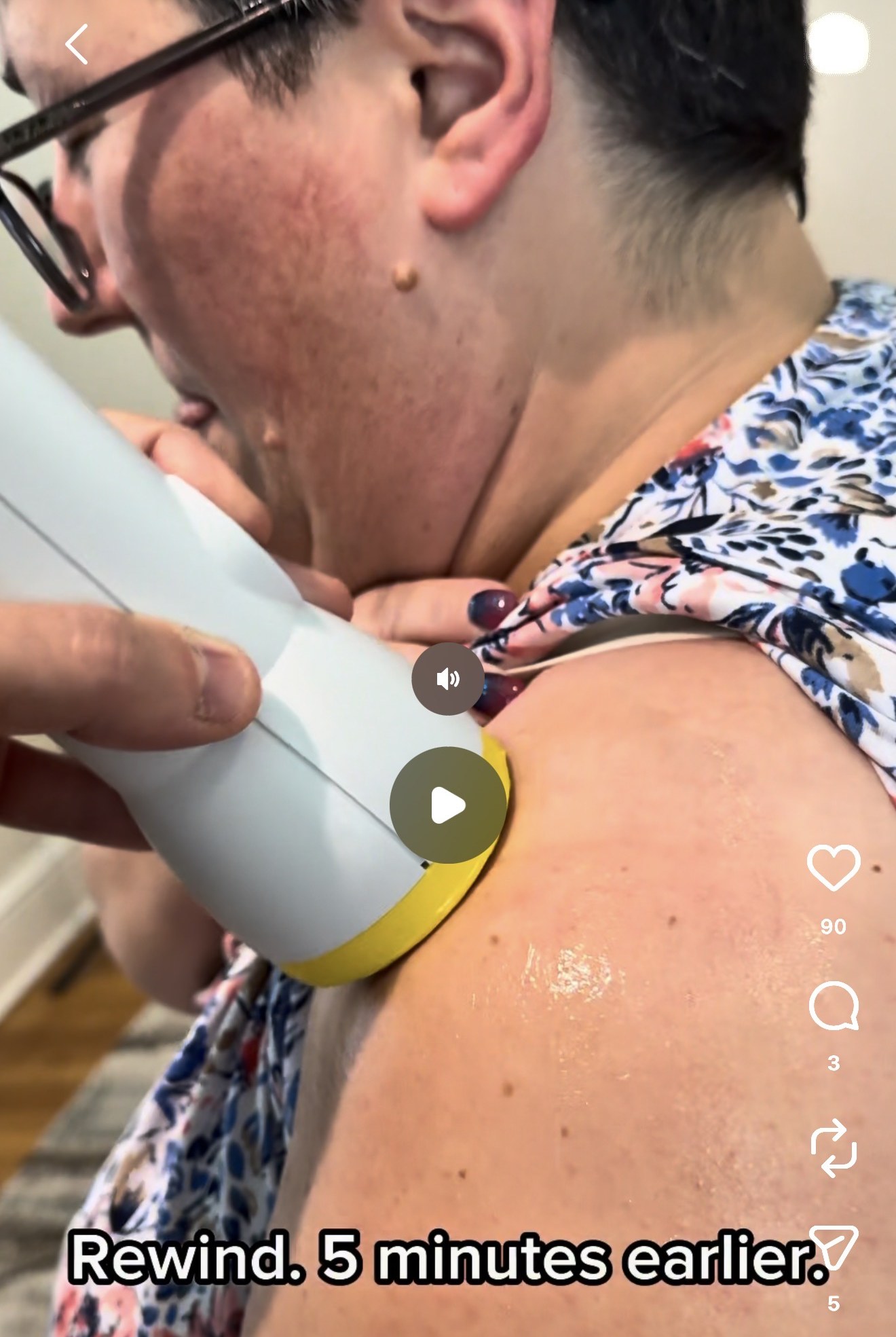
Each SoftWave session takes approximately 15 minutes. The applicator is placed over the affected tissue — the IT band, patellar tendon, hip flexor, lumbar paraspinals, or wherever the pain lives — and delivers comfortable acoustic waves directly into the area. No anesthesia, no needles, no downtime. Most patients describe it as a pulsing or tapping pressure.
Some patients experience mild post-session soreness in the treated area for up to 24 hours — a normal sign that the healing cascade has been activated. After that, the trajectory is progressive: less pain on the bike, better tolerance to ride volume, and easier recovery between training sessions.
Most cyclists report meaningful change within the first two to four sessions — longer pain-free rides, better seated comfort, and the ability to push harder gearing without flaring the old injury.
Stop Resting. Start Healing. Stay on the Bike.
If you’ve been told to ride less, take more anti-inflammatories, ice it after every ride, or just accept that cyclists have knee and back pain — know that there is a powerful, evidence-supported alternative right here in Charleston. At Fix Your Pain Charleston, Dr. Jeremiah Jimerson is helping cyclists heal completely — not just push through.
Your knees, hips, and back deserve more than a patch. They deserve real regeneration — and with SoftWave Tissue Regeneration Therapy, that is exactly what’s possible.
Don’t let a cycling injury cut your season short. Schedule your SoftWave evaluation at Fix Your Pain Charleston today — and find out what it feels like to heal the right way.
Fix Your Pain Charleston
Dr. Jeremiah Jimerson, DC, ART
761 Saint Andrews Blvd, Charleston, SC 29407 // 843.873.6004
‹ Back



 761 St Andrews Blvd